
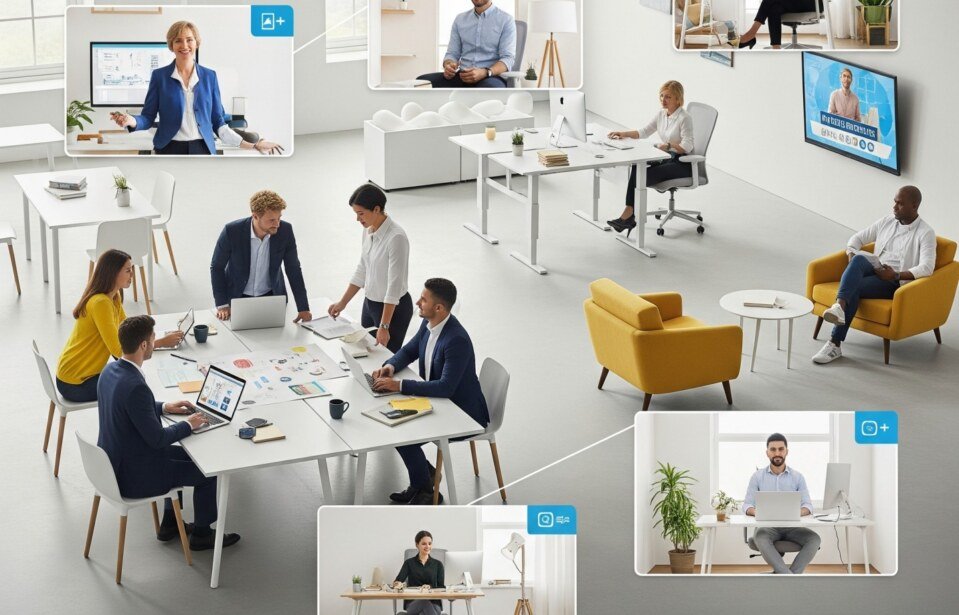
The traditional office model has undergone a significant transformation. Rather than returning completely to five-day in-person weeks or shifting entirely to remote work, modern enterprises are adopting a middle ground. By combining remote work with structured in-office collaboration, hybrid work has established itself as the new corporate standard, helping companies optimize real-estate costs while maintaining employee productivity.
In this guide, we will examine the economic drivers behind the shift to hybrid work, share operational best practices for management, and compare working models in a structured table.
Key Drivers of the Shift to Hybrid Work
The permanence of the hybrid model is supported by clear operational benefits for both employers and staff:
- Real Estate Cost Optimization: By rotating staff in offices, companies can downsize their physical workspaces, significantly reducing corporate lease overhead.
- Talent Attraction and Retention: Offering location flexibility has become a key factor in recruitment, helping companies access a wider talent pool.
Working Models Compared
Compare the three primary corporate working arrangements:
| Working Model | Employee Retention Rate | Corporate Overhead Cost | Team Collaboration Speed | Management Tracking Method |
|---|---|---|---|---|
| On-Site (5 Days) | Low (Lacks flexibility) | High (Lease, utilities, equipment) | Fast (Instant face-to-face feedback) | Hours-at-desk monitoring |
| Fully Remote | High | Very Low (No physical office cost) | Asynchronous (Can introduce delay) | Objective-based deliverables |
| Hybrid Work | High | Moderate (Optimized hot-desking) | Fast (On collaborative office days) | Asynchronous tracking & milestones |
Best Practices for Implementing Hybrid Models
To run a hybrid organization successfully, managers should adopt several operational policies:
- Enforce a Documentation-First Culture: Ensure all decisions, roadmap updates, and meeting summaries are documented in shared spaces (like Notion or Confluence), so remote workers remain aligned.
- Define Core Collaboration Hours: Establish specific windows (such as 10:00 AM to 3:00 PM) for team meetings, allowing staff to plan independent deep-work sessions around them.
Summary
In summary, the transition to **hybrid work** allows organizations to balance the benefits of face-to-face collaboration with the flexibility of remote work. By standardizing documentation and communication, teams maintain alignment. To examine home lab setups and security tools used by remote engineers, read our guide on remote entry-level cyber security jobs. For detailed research on global remote work productivity and economic impacts, consult the Stanford WFH Research Database.


Leave a comment