
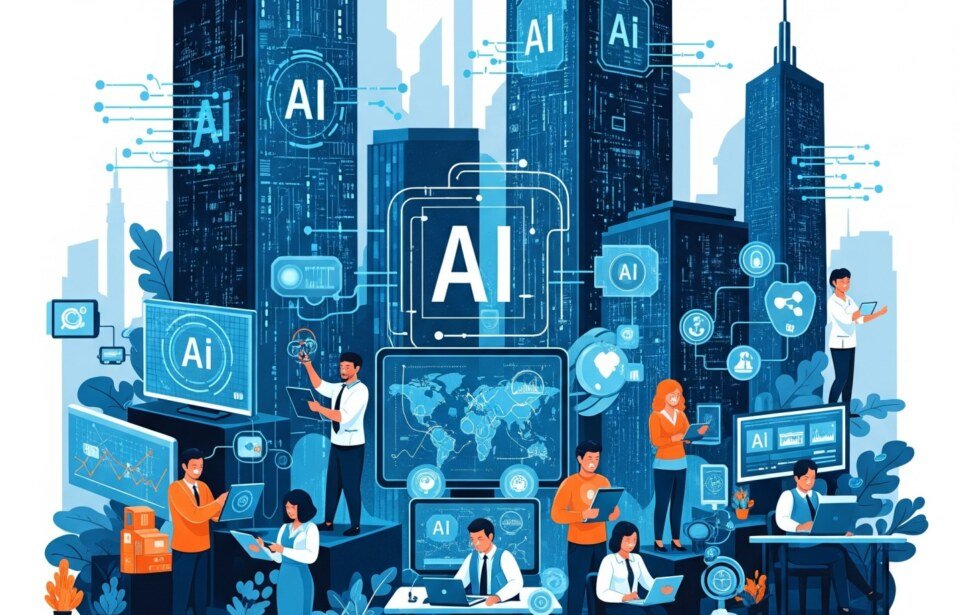
The global technology sector is undergoing a significant transition. While the initial wave of layoffs in 2023 was primarily a correction to post-pandemic over-hiring, current reductions represent a structural shift. As organizations redirect capital from general software teams to artificial intelligence research and high-performance GPU clusters, the frequency of tech layoffs has increased. Navigating this new reality requires professionals to align their skills with AI-native systems engineering.
In this guide, we will analyze the causes behind recent corporate restructurings, identify the technical roles currently in high demand, share strategies for future-proofing your career, and compare role resilience in a comparison table.
Why Tech Layoffs are Shifting Focus to AI Infrastructure
The main drivers of current staff reductions differ from legacy economic recessions:
- Capital Realignment: Hyperscalers and tech giants are redirecting billions of dollars from general engineering divisions to secure GPU compute capacity, fund foundational models, and build out AI datacenters.
- Automation of Routine Coding: The adoption of AI coding assistants has increased developer output, reducing the need for large teams of junior engineers to perform routine coding and debugging tasks.
Career Resilience by Technical Role
Refer to this table to evaluate the impact of automation and hiring trends across different tech roles:
| Technical Role | Vulnerability to AI Automation | Skills in High Demand | Projected Hiring Trend |
|---|---|---|---|
| Junior Web Developer | High (Standard templates are easily automated) | API integration, custom UI design, system testing | Declining / Replaced by Copilot users |
| AI Solutions Architect | Very Low | LLM fine-tuning, RAG system design, vector databases | Exponential Growth |
| System Reliability Engineer (SRE) | Low | Cloud cost management, serverless scaling, security compliance | Stable / High Demand |
| Information Security Engineer | Very Low | Penetration testing, cryptography, network boundary protection | Strong Growth |
How to Future-Proof Your Career
To remain competitive during this period of transition, engineers should focus on developing capabilities in high-demand domains:
- Master System Design over Basic Coding: Focus on understanding how scalable systems, serverless databases, and data pipelines fit together, rather than just writing clean syntax.
- Learn to Deploy Neuro-Symbolic Systems: Develop expertise in integrating generative transformers with verification loops and database layers.
Summary
In summary, while structural **tech layoffs** present challenges, they also mark a transition to an AI-driven economy. By focusing on systems engineering and security, you can position yourself for high-demand roles. To explore specialized career options in defensive technology, read our guide on careers in cybersecurity. For real-time tracking of labor market metrics and restructuring data, visit the Layoffs.fyi Tracker Portal.



Leave a comment